
Exploring Deeper Time In Warsaw
A visit to the Polish capital's Uprising Mound helps bring time and memory into focus

It should have been an acutely embarrassing moment. But at the time I was sure I was right, even if it later proved that I was wrong—and, it turned out, my use of AI, specifically Claude, was to blame. Not in terms of accuracy, but of style.
On stage at the Copernicus Science Centre in Warsaw, two realities collided: what I thought to be true and what was. And the experience spurred me to think about the role of memory—and about the role of technology in storing and accessing our individual and collective memories.
Looking back, I was primed to pursue this line of thought because I had just returned from a visit to the Warsaw Uprising Mound, an extraordinary experiment in deep time and regeneration, of which more in a moment. And among several books I was reading on the trip was Chapterhouse Dune, a 1985 novel by Frank Herbert, the sci-fi author who I had met back in 1983—a story told in my 2024 book, Tickling Sharks.
A feature in the landscape
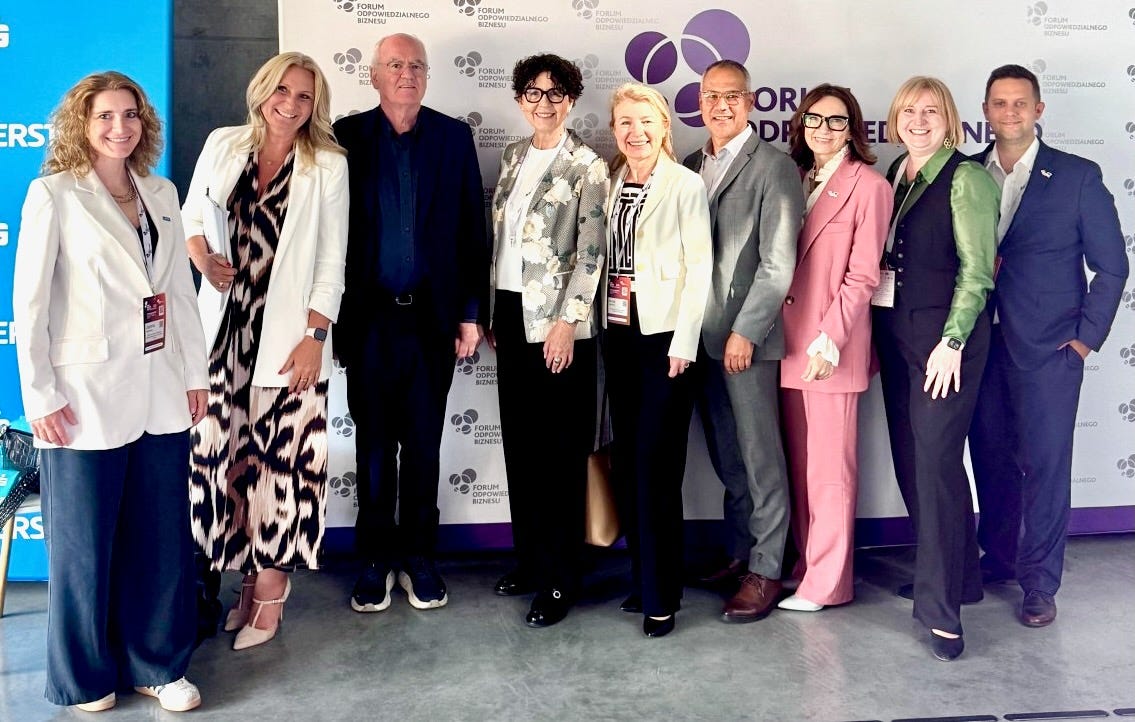
In any event, after keynoting the ESG Ideas Fair in Warsaw, I was delighted to do a three-way fireside chat session later in the day with Irena Pichola, president of the management board of the Responsible Business Forum, Poland’s largest sustainability-focused NGO, and both chair of the Chapter Zero Poland Steering Committee and CEO of Artha Consulting Network, and professor Boleslaw Rok, one of the forum’s founders back in 2000.
Boleslaw, who I had met once before, a long time ago, is a major feature in the landscape. His roles at Kozminski University, one of Central and Eastern Europe’s leading business schools, include head of sustainability transition, professor of corporate sustainability management—as well as director of the positive entrepreneurship research lab and director of the “SDGs in the Company’s Strategy” executive programme.
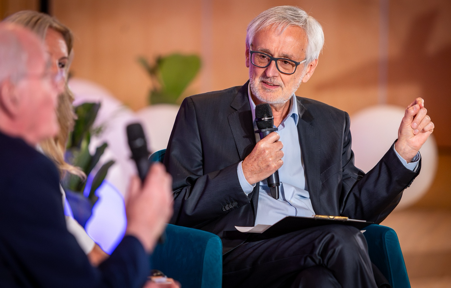
Given all of which, it was a delight to rediscover that he has a wonderful sense of humor. Which helped defuse the memory loss glitch. Boleslaw had quoted the opening line of my May 18th Substack post on the transition from soft to hard sustainability, which ran:
“On 28 February 2026, the soft sustainability era ended without most people noticing. It had been ailing for a while—anyone with eyes could see the symptoms—but it took a war to confirm the rupture.”
I had pushed back that I was sure I hadn’t written the line and, in fact, I was right. Claude had written it under my prompting—so I was using language that wasn’t mine. Lesson learned, though I plan to continue using AI to inform and sub-edit my work. And when I asked Claude to comment on the incident, it suggested:
The machine and you had made it together, which is to say the machine had largely made it and you had nodded—and you do not remember what you did not directly make. Psychologists call it the generation effect: we retain what we generate far better than what we are handed. The very convenience that produced the sentence is the exact reason it never lodged in your memory. The tool had not backed up your memory. Instead, it had quietly replaced the act that would have formed one.
Minsky and the fading of memory
Uncomfortable, as learning often can be, but this moment set me thinking about how the use of AI will impact our memory of the work that we all think that we have done. And, more fundamentally, it had me pondering the implications of the worldwide boom in data storage and data farms for our collective memory.
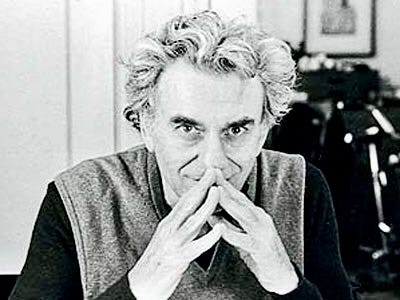
Someone whose work I came to relatively recently is the economist Hyman Minsky, who died exactly thirty years ago, in 1996. He didn’t treat “memory” as a standalone subject, but the fading of memory sits at the core of his most influential idea, the Financial Instability Hypothesis. His central claim—often compressed into the phrase “stability is destabilizing”—is that long stretches of economic calm quietly manufacture the next crisis, precisely because they erode people’s recollection of how badly things can go wrong.
And it strikes me that this is as true of politics and of the building climate and biodiversity emergencies as it is of markets. Interestingly, Minsky himself leaned away from purely psychological or “behavioral” explanations. He preferred to ground instability in the objective arithmetic of balance sheets and cash-flow commitments rather than in something as soft as collective forgetting. So, the clean “memory of the last crash fades, therefore people get reckless” narrative is partly a popularization of his work.
The thinker who made the memory angle most explicit was Charles Kindleberger, a leading architect of the post-WWII Marshall Plan, who in Manias, Panics, and Crashes drew heavily on Minsky and emphasized how the passing of a generation—the literal dying-off of people who remembered the previous bubble—helps set up the next one for failure.
Storage is not memory
As I thought all of this through with the aid of books, Google and Claude, I learned that storage is not memory. The cuneiform tablet and printing revolutions expanded storage—the externalized, durable record—but a civilization’s actual memory is something much narrower, more alive, more in the moment. Let me quote Claude at some length here, in edited form:
The Egyptologist Jan Assmann drew a useful line between “storage memory,” the total inert archive of everything retained, and “functional memory,” the small, actively interpreted canon a culture carries forward as meaningful. Living memory is curation—the past organized around significance. The striking feature of the present boom is that it inflates storage almost without limit while doing nothing for function, and possibly even degrading it.
Notice how the data boom inverts the old relationship between remembering and forgetting. For the scribe and the printer, recording was expensive, so selection happened at the moment of inscription; forgetting was the default and remembering took effort. We have reversed this.
Storage is now cheaper than the decision of what to delete, so retention is the default and forgetting has become the deliberate act. That inversion is the genuinely new thing, more than mere speed or volume—and the everything-record we accumulate is paradoxically fragile.
Clay tablets are legible after four thousand years; a hard drive may not survive twenty without active migration. We risk an archive at once total and precarious, abundant and unreadable: a digital dark age.
The anxiety is ancient, however, which is worth remembering as a check on alarmism. In the Phaedrus, Plato warns that writing produces forgetfulness, giving us “the appearance of wisdom, not true wisdom.” Renaissance scholars drowning in printed books made the same complaint. Each externalization provokes the fear of atrophy, and each time the faculties shift rather than decay.
Maybe the real problem is not the quantity of memory at all. Instead, it seems to be the very processes of remembering and forgetting—which is where Frank Herbert turns out to have been so insightful.
Other Memory
“Other Memory,” as Herbert painted it in his Dune series of novels, is not data. It is the complete, first-person, lived experience of every ancestor, available to a Bene Gesserit Reverend Mother as an inner, online counsel of living presences. And the first thing Herbert insists on is that you cannot simply receive it. It is earned through the ordeal of the “spice agony,” a transformation that builds a self that can hold the multitude.
So, access to total memory requires a corresponding development of the one who accesses it. Our data boom hands us the archive without the ordeal—the storage without the integrative capacity. And Herbert named what happens when memory arrives in a self too unformed to govern it: Abomination. A key character is Alia, who gains Other Memory before she has an ego of her own. So she does not wield the ancestral voices but is colonized by them.
A culture with total recall but no mature selfhood does not command its archive. It is ruled by it—governed not by present judgment but by whichever voices in the record are loudest and most insistent.
Then the Dune series’ ultimate move: prescience, the natural extension of total memory into total foresight, turns out to be a trap. Paul and Leto become imprisoned by the futures they can see, and Leto’s entire millennial project—the Golden Path, the Scattering—aims at breeding a humanity that can become unpredictable, restoring the open and unforeseen future.
Herbert’s final judgment is that a living civilization depends on its capacity for the genuinely new, which means its capacity to not be wholly determined by the recorded past.
The Warsaw Uprising Mound
Still, we need to anchor our thinking about the future with a well-grounded understanding of the past, which brings me back to my serendipitous visit to the Warsaw Uprising Mound. I went in the company of Justyna Biernacka and her husband Piotr Biernacki, co-founders of Warsaw-based “sustainability pathfinders” Materiality, and their friend professor Katarzyna Sadowy from the Warsaw School of Economics.
Justyna had got in touch originally because of my earlier posts here on the concept of deep time. She suggested that the Warsaw Uprising Mound provides a working model of how deep time can be brought into the present—and invited me to visit it. I grasped the opportunity with both hands.
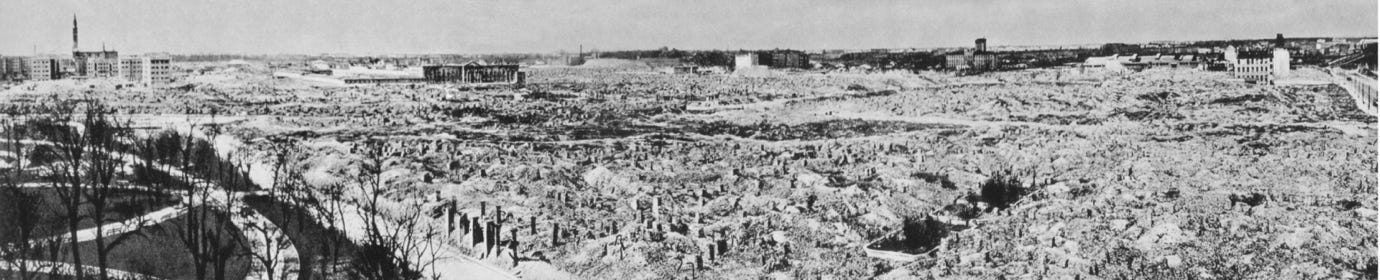
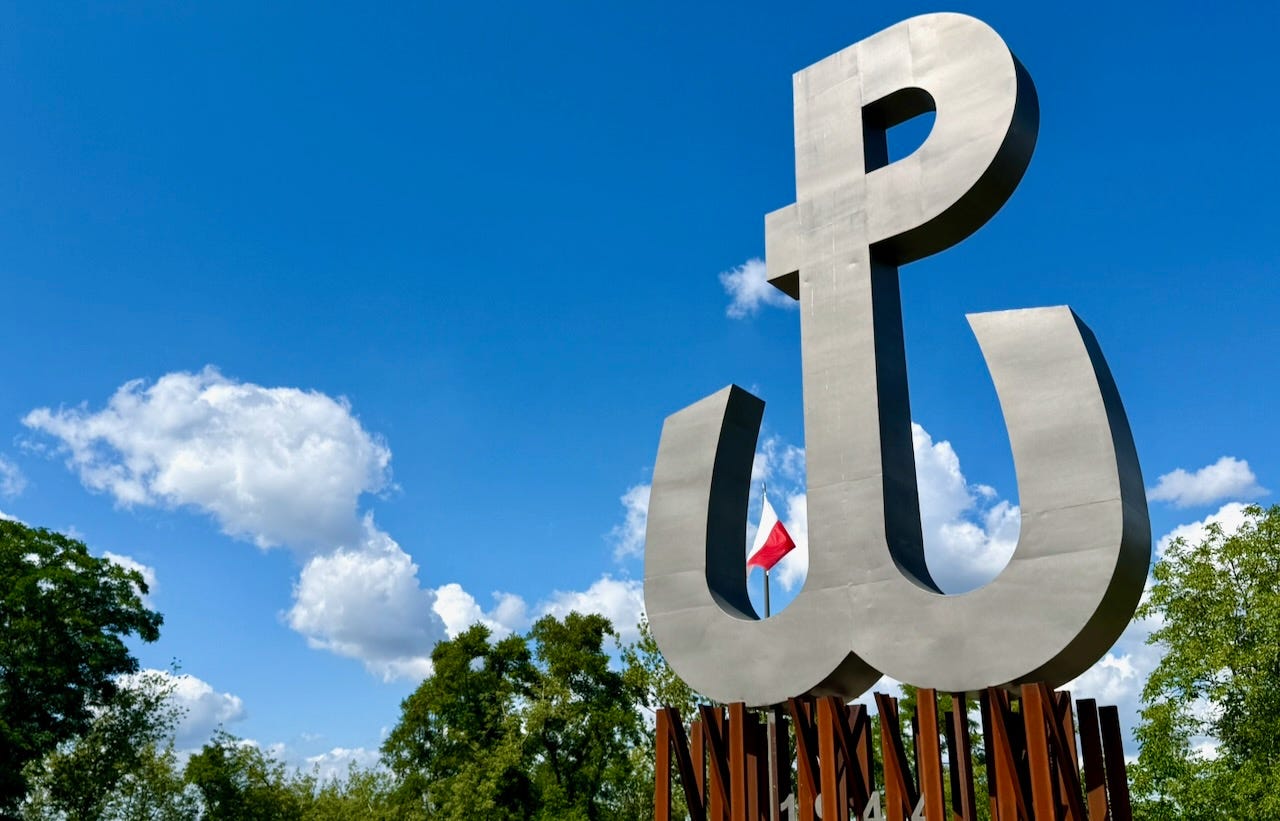
Off we went to the south of the city, where the Warsaw Uprising Mound is built from the rubble of the destroyed city—millions of cubic metres of it. The broken remains of a capital that was roughly eighty-five percent flattened by the end of the war.
Warsaw’s rubble can be seen as sedimentary layers of successive catastrophes: the ghetto razed after the rising of 1943, the city razed after the rising of 1944. The architect who first campaigned for the mound, Stanisław Gruszczyński, argued that the debris should not be treated as waste but as relics—that millions of hands had touched these bricks, that thousands of lives had been lived between them. Sadly, he died before the Mound evolved into its current form.
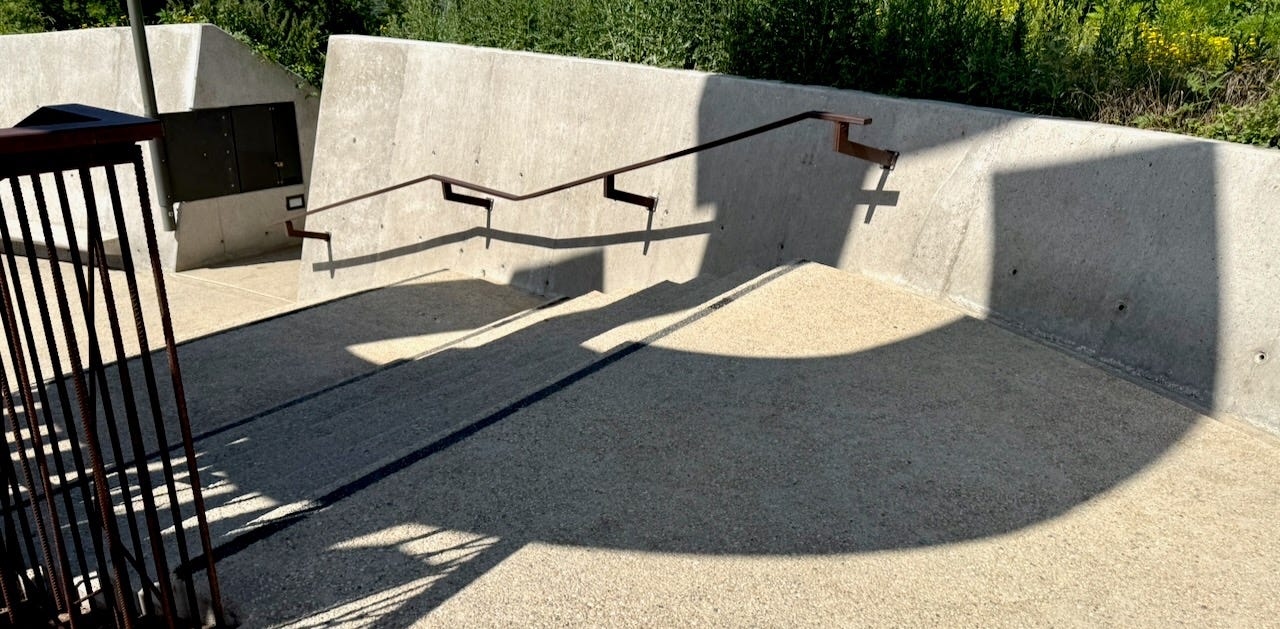
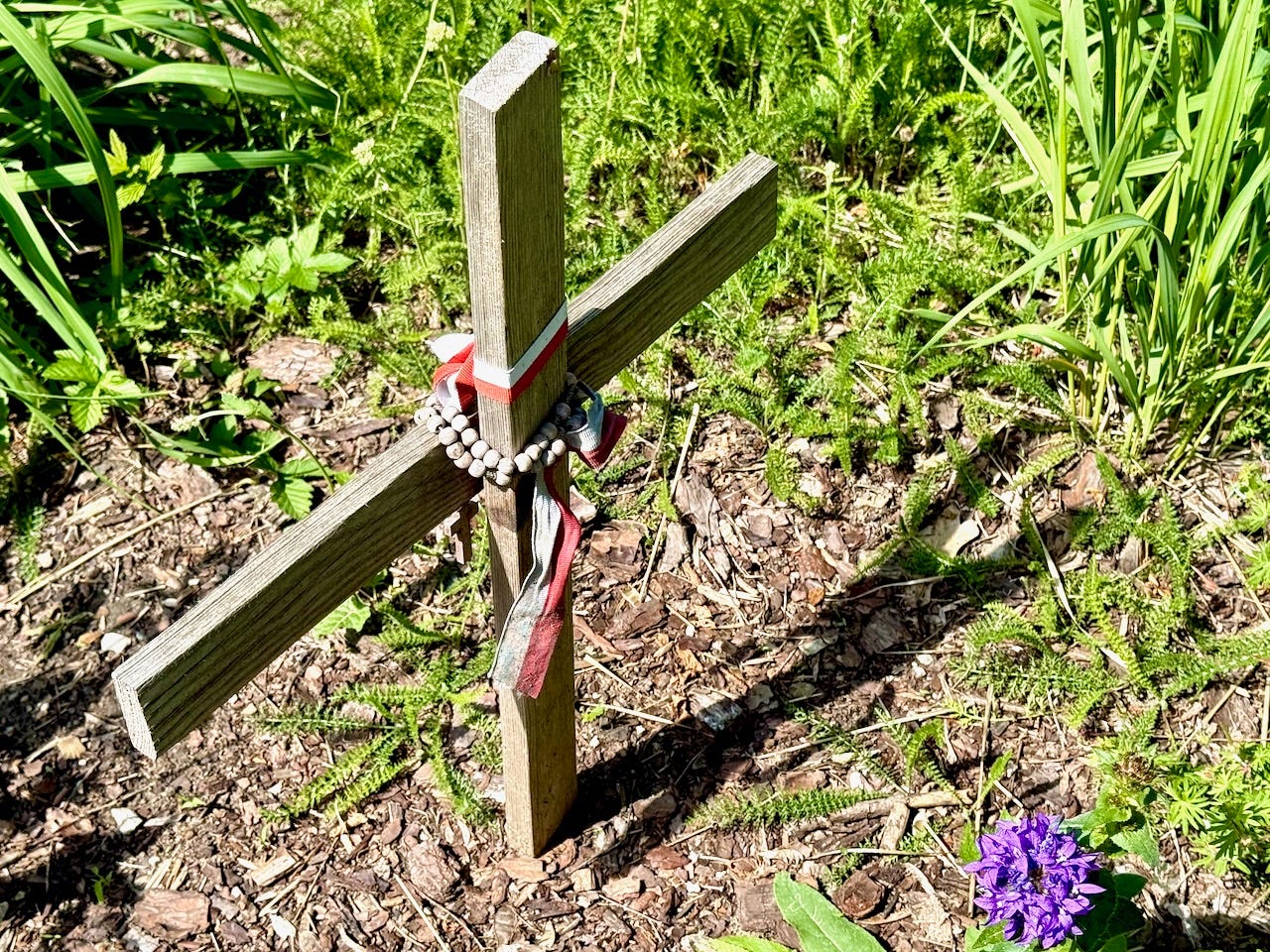
For decades it was not a monument. Maps into the 1990s labelled it Góra Śmieci—the “mountain of trash.” The rubble was there, providing total storage for the ruins of the catastrophes—and yet it meant little to most people. It became a monument only when people chose to read it as one: to name it, climb it, line its stairs with crosses, and remember.
The Mound is the act of remembering that turned rubble into relic and collectively held memory. And perhaps that, finally, is what divides shallow time from deep time. Social media, by contrast, is the heap that never becomes the mound.
Deep time, well used, works differently. It compresses an enormous quantity of the past into a small, dense, climbable form that you can stand on top of and see from. What makes the regeneration project so fitting here is that it refused to import new materials to dignify the hill.
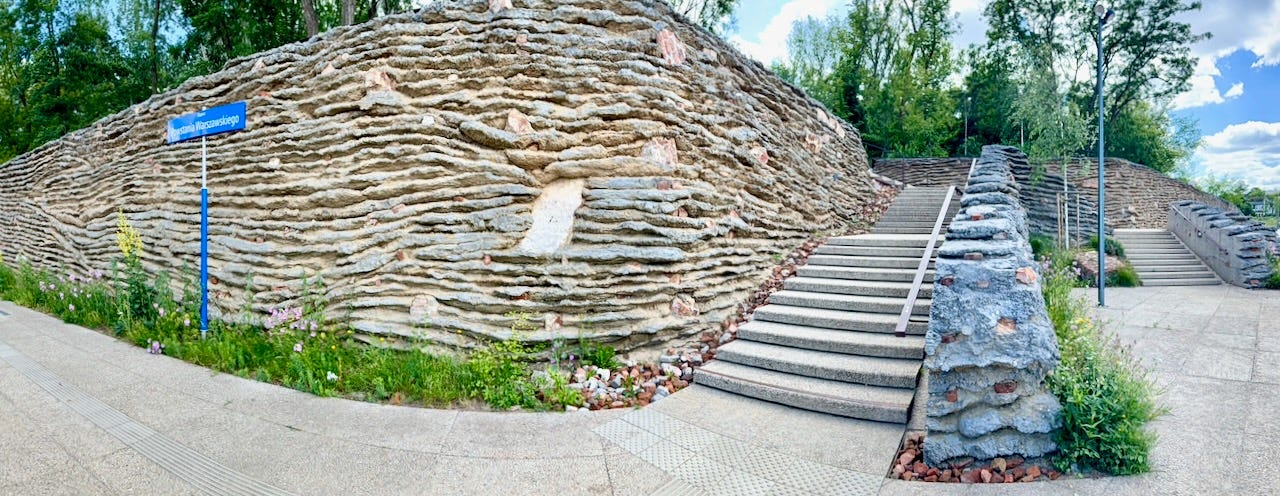
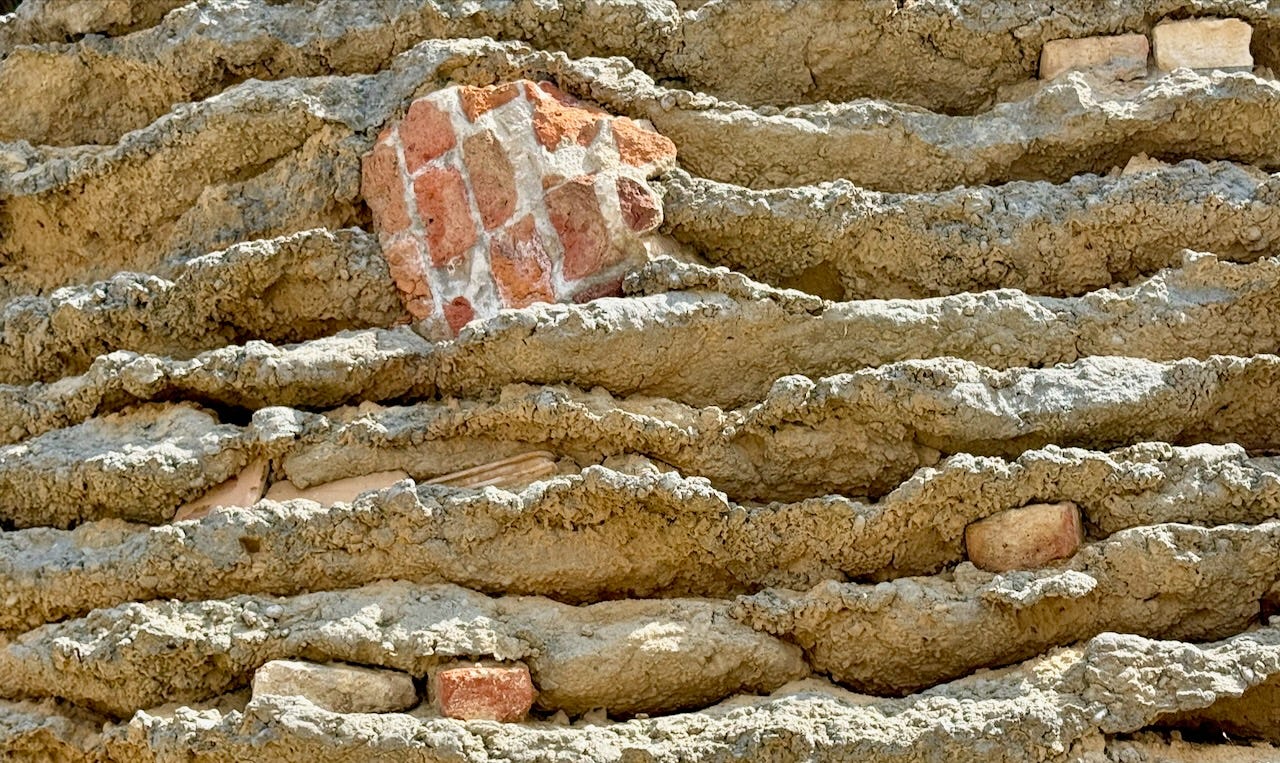
The whole project ran on circular principles: all the excavated material stayed on site, and the rubble was sorted and reused—large fragments put on display, smaller ones packed into gabion cages, and the loose remainder processed into a “rubble-concrete” for the retaining walls. They even named this anthropogenic stone Warsaw’s urbanite.
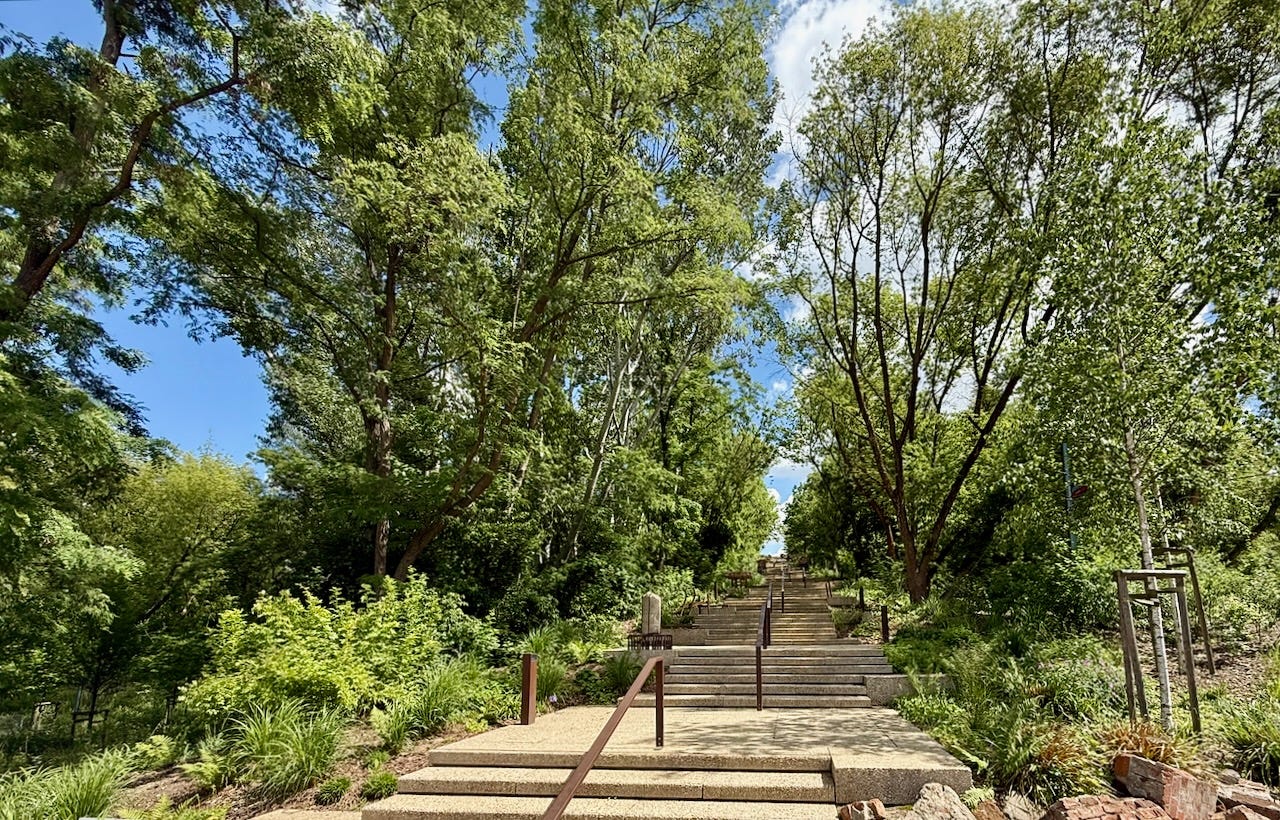
The Mound also incorporated what nature had already done during the decades of neglect. Rather than clearing the wild forest that had grown over the dump, the architects kept the mature trees and threaded a treetop walkway among them, complementing the scrub with drought-resistant native planting that needs no irrigation. The rubble-concrete walls were inoculated with a moss-and-yoghurt mixture so that they will slowly green over.
Who are tomorrow’s integrators?
Now, maybe, AI gives us—and for the first time—something akin to Frank Herbert’s Other Memory: the possibility of almost total recall. That is genuinely a gift, but both the real-world Mound and the fictional Bene Gesserit order pose the same single question: Who is doing the necessary integrating?
That is the challenge for us all in the coming decades. The necessary balance between shallow and deep time will not be achieved by remembering less, nor by handing the remembering over wholesale to expert systems, data farms and the like. Instead, we must allow the machines to hold our version of the rubble while we are freed to do the climbing—and to report back on what we see.
***
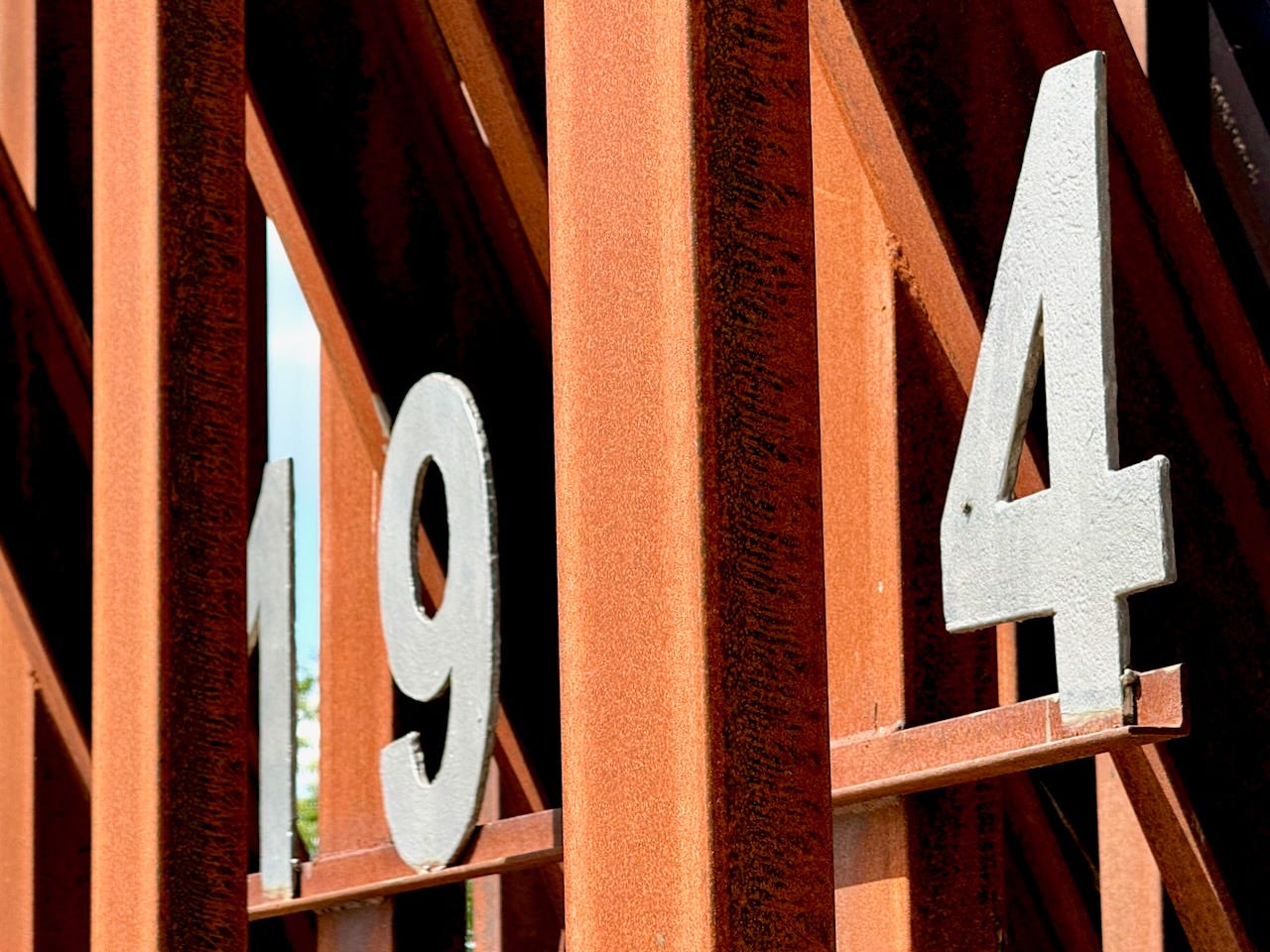
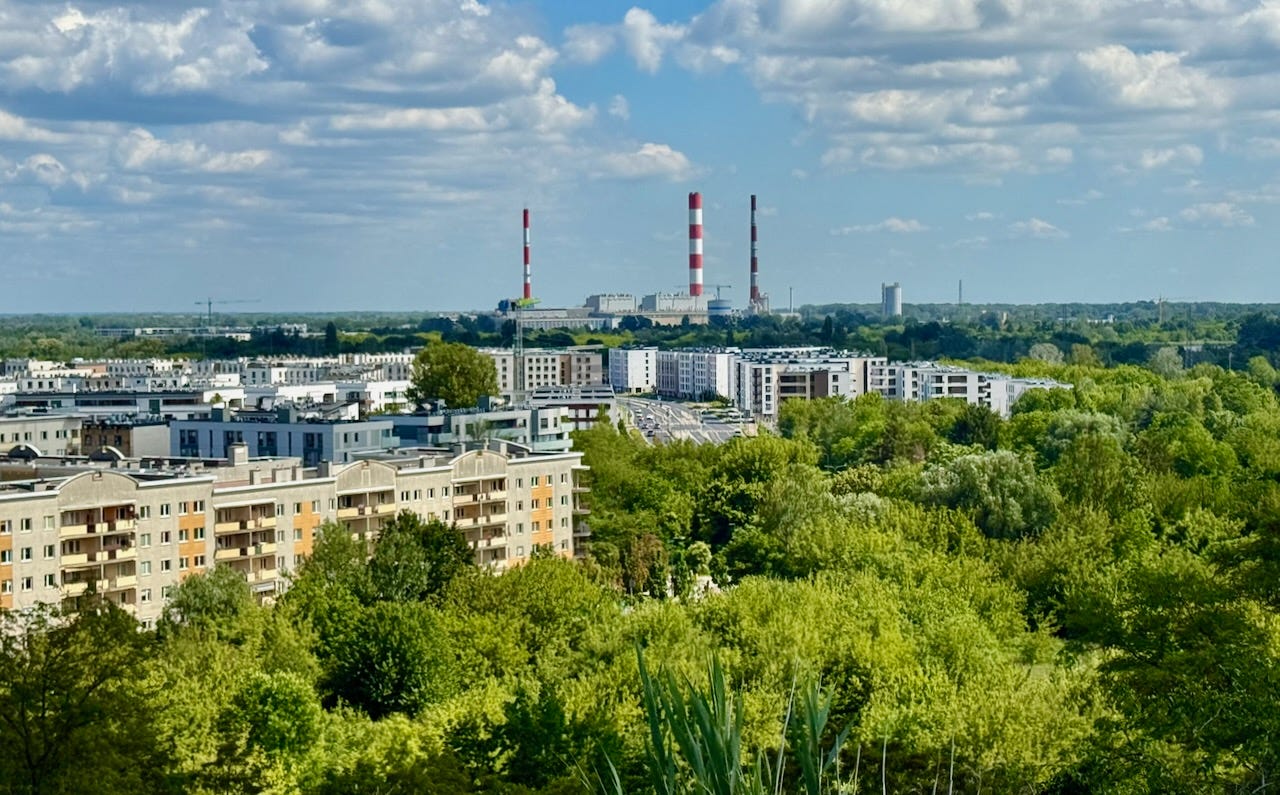
And now, finally, a brief photo essay on our Mound adventure:
Another fascinating commentary John. I remember you saying when we chatted that Frank Herbert's Dune was one of the very first science fiction novels, and then series, that took ecology seriously.
Referencing another of your recent posts: if Stanisław Gruszczyński died before seeing the result of his vision, was he something like a Conceptual Cathedral Builder, I wonder, who never lived to see even the physical beginnings of it? :)
Thank you so very much John, it is nice to reconnect. This post held special meaning for me. When I was 23 years old, I spent several months in Poland touring around with the Psychotronic Institute and got to participate and lecture in workshops, retreats and visits all over the country. While living in Katowice, I spent time in Warsaw, Krakow, Gdansk, the river Wisla near the Czech border and many other places. I even got to meet Lech Walesa in Gdansk when he was in hiding after Solidarity. Poland and the people and especially their resilience holds a very special place in my heart. Your story touched me deeply in more ways than one. I am also a learning technologist dedicated to seeing how we can use AI, AR, VR, Gaming, Automation, Robotics and Blockchain for the betterment of humankind. Your portrayal of memory and deep mind and how machine's abilities traverse or even conflict with woman and mankinds abilities offers much room for contemplation and potential resolution of these chaotic times. Warmest to you. Bonnie